Chile (Santiago) Semester Exchange Program
Universidad de los Andes
Universidad de los Andes
|
For Program Dates:
Please review the Universidad de los Andes academic calendar For Course Selections and Housing Information: See host university website and housing *For MUJA Dates and Deadlines: See our Application Instructions |
|
Travel Writer Blog
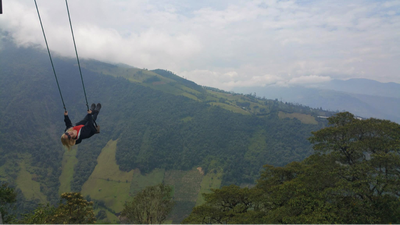
This semester, Taylor Twellman, one of our three official travel writers, will be filling us in on her experiences leading up to and experiencing her exchange program in Chile. Click the images below to read up on what she's been doing. (Taylor's posts will appear once every three weeks).
This semester, Taylor Twellman, one of our three official travel writers, will be filling us in on her experiences leading up to and experiencing her exchange program in Chile. Click the images below to read up on what she's been doing. (Taylor's posts will appear once every three weeks).
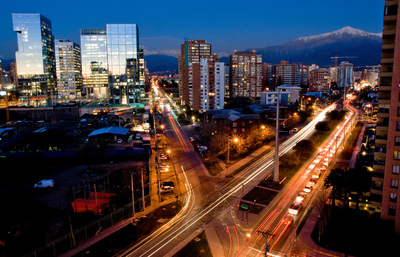
Studying at Universidad de los Andes permits students to explore a major Latin American capital city while exercising their Spanish language skills and experiencing journalism in a new culture. While a few, select courses are taught in English, most classes will be instructed in Spanish.
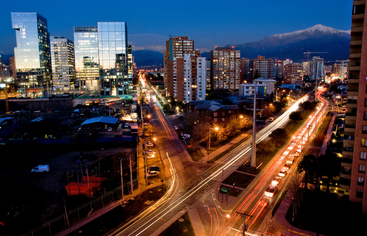
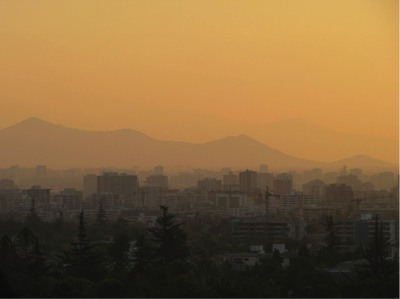
The private university is located at the foot of the Los Andes Mountains in Santiago de Chile, a thriving metropolitan area home to nearly seven million. The Universidad de los Andes campus in Santiago combines modern infrastructure with green areas where students can find all they need for learning, research, sports and extracurricular activities.
The metro system, along with Santiago’s central location, makes studying abroad here the ideal spot for exploring all of Chile. The city if filled with high-end shops, restaurants, theaters and museums. Traveling just a couple hours outside the city will allow students to find great venues for skiing and hiking, or, put them face to face with long stretches of ocean beaches in the other direction.
The private university is located at the foot of the Los Andes Mountains in Santiago de Chile, a thriving metropolitan area home to nearly seven million. The Universidad de los Andes campus in Santiago combines modern infrastructure with green areas where students can find all they need for learning, research, sports and extracurricular activities.
The metro system, along with Santiago’s central location, makes studying abroad here the ideal spot for exploring all of Chile. The city if filled with high-end shops, restaurants, theaters and museums. Traveling just a couple hours outside the city will allow students to find great venues for skiing and hiking, or, put them face to face with long stretches of ocean beaches in the other direction.
You may earn up to 12 credit hours for each semester of academic work completed abroad, nine hours of which may be Journalism specialty area credit credit.
Course credit transfers to MU as pass/fail.
Although you are guaranteed to receive credit for successfully completed courses, you must work with your advisors to get pre-approval for how the courses you take might fulfill specific degree requirements. Follow this link to schedule an appointment with your academic advisor.
Course credit transfers to MU as pass/fail.
Although you are guaranteed to receive credit for successfully completed courses, you must work with your advisors to get pre-approval for how the courses you take might fulfill specific degree requirements. Follow this link to schedule an appointment with your academic advisor.
Undergraduate applicants with a minimum GPA of 3.0 who have completed either J4200 (Principles of Strategic Communication) or J4180 (Newsroom Content Creation). Applicants who will complete one of these courses in the semester/term preceding the term for which they are applying will be considered for conditional acceptance to the program.
All students must be in good academic standing. If an applicant has a GPA below a 3.0, a letter of appeal should be included with their application.
Applicants should compose a well-constructed resume highlighting technical skills for use in the professional placement process. Students should also consider developing a portfolio to provide, if requested.
Applicants to this program must have a sufficient command and understanding of the Spanish language. Typically, students participating in this program have completed SPAN 3150 or higher and can provide a recommendation from a Spanish Language faculty member.
All students must be in good academic standing. If an applicant has a GPA below a 3.0, a letter of appeal should be included with their application.
Applicants should compose a well-constructed resume highlighting technical skills for use in the professional placement process. Students should also consider developing a portfolio to provide, if requested.
Applicants to this program must have a sufficient command and understanding of the Spanish language. Typically, students participating in this program have completed SPAN 3150 or higher and can provide a recommendation from a Spanish Language faculty member.
MU attempts to make the costs of studying abroad affordable for you. Generally, study abroad experiences cost a bit more than a semester at MU. But time abroad includes new experiences, cultures, and languages that you are investing in, which often require expenditures on housing, flights, and other program related costs. It's highly recommended that you outline a budget for yourself of what you would spend during a semester here at MU and compare it to study abroad costs. Because this is an exchange program, you will pay MU educational fees (12 or 15 credits) as if you were here on campus for the semester. In addition, you will also pay an MU Study Abroad fee to cover MU orientation, ISIC card, administration, and assistance. Additional expenses to consider for this program include international airfare, personal transportation, insurance, on-site housing costs and other miscellaneous expenses.
Program Costs*
Total Program Costs: $1,807.3
Program Fee, Insurance, and Study Abroad Administration Fee
(Note: Total Program Costs do not include tuition)
Breakdown of total fee:
Program Fee: $1,250
MU Mandatory International Health Insurance (HTH): $300
MU Study Abroad Administration Fee: $257.30
Additional Costs
Students will also be responsible for regular tuition and required educational fees associated with 12 or 15 credit hours. For specific fee information, visit the Cashier's website.
Personal Expenditure Estimates:
Round-trip Airfare: $1,500 - $1,900
Housing $4,000
Meals (weekly) $100 - $125
Transportation (weekly) $15
Chilean Visa: Prices vary. Check host country embassy website for details
Please note that these expenses do not include vacation travel or sightseeing. The amounts listed are estimated costs based on current exchange rates and on the information provided to us by institutional partners and past participants. Depending on your personal spending habits, you may spend more or less than the figures provided
Program Costs*
Total Program Costs: $1,807.3
Program Fee, Insurance, and Study Abroad Administration Fee
(Note: Total Program Costs do not include tuition)
Breakdown of total fee:
Program Fee: $1,250
MU Mandatory International Health Insurance (HTH): $300
MU Study Abroad Administration Fee: $257.30
Additional Costs
Students will also be responsible for regular tuition and required educational fees associated with 12 or 15 credit hours. For specific fee information, visit the Cashier's website.
Personal Expenditure Estimates:
Round-trip Airfare: $1,500 - $1,900
Housing $4,000
Meals (weekly) $100 - $125
Transportation (weekly) $15
Chilean Visa: Prices vary. Check host country embassy website for details
Please note that these expenses do not include vacation travel or sightseeing. The amounts listed are estimated costs based on current exchange rates and on the information provided to us by institutional partners and past participants. Depending on your personal spending habits, you may spend more or less than the figures provided
The financial aid you normally receive for your classes at MU is usually applicable. Please visit with your Financial Aid Advisor at the MU Student Financial Aid Office (11 Jesse Hall) to explore your financial aid options: 573-882-7506.
In addition, the School of Journalism offers need-based travel scholarships each semester and you can also apply for additional scholarships through the MU International Center (Memorial Union). Watch our website, follow us on Twitter and like us on Facebook for special program scholarship announcements each semester.
Finally, check out our special page on Funding Your Experience for more information including links to our MU Journalism Abroad Travel Scholarship, MUJA Travel Writer Scholarship, external scholarship options, and Steps to Apply for Financial Aid.
In addition, the School of Journalism offers need-based travel scholarships each semester and you can also apply for additional scholarships through the MU International Center (Memorial Union). Watch our website, follow us on Twitter and like us on Facebook for special program scholarship announcements each semester.
Finally, check out our special page on Funding Your Experience for more information including links to our MU Journalism Abroad Travel Scholarship, MUJA Travel Writer Scholarship, external scholarship options, and Steps to Apply for Financial Aid.
We have recently altered our application process and are fully paper-based. Information regarding our full process can be found on the "How to Apply" page, which can be accessed via the navigation window or by clicking the button below.
Please remember to hand in all items by the deadline for your individual program.
Please remember to hand in all items by the deadline for your individual program.
Drew Dumas and Daniella Ricciardi are full-time journalism study abroad student advisors. You can schedule an appointment through MU Connect. Please direct program specific inquiries to their email addresses:
DumasA@missouri.edu
DMRicciardi@missouri.edu
Our office is located at 280 Gannett Hall.
For more information, please visit our Contact page.
DumasA@missouri.edu
DMRicciardi@missouri.edu
Our office is located at 280 Gannett Hall.
For more information, please visit our Contact page.
